Arrow Crosswords
- 4.6
- Rating
- 100.00K
- Installs
- Free
- Price
 Analysis by App-foxy
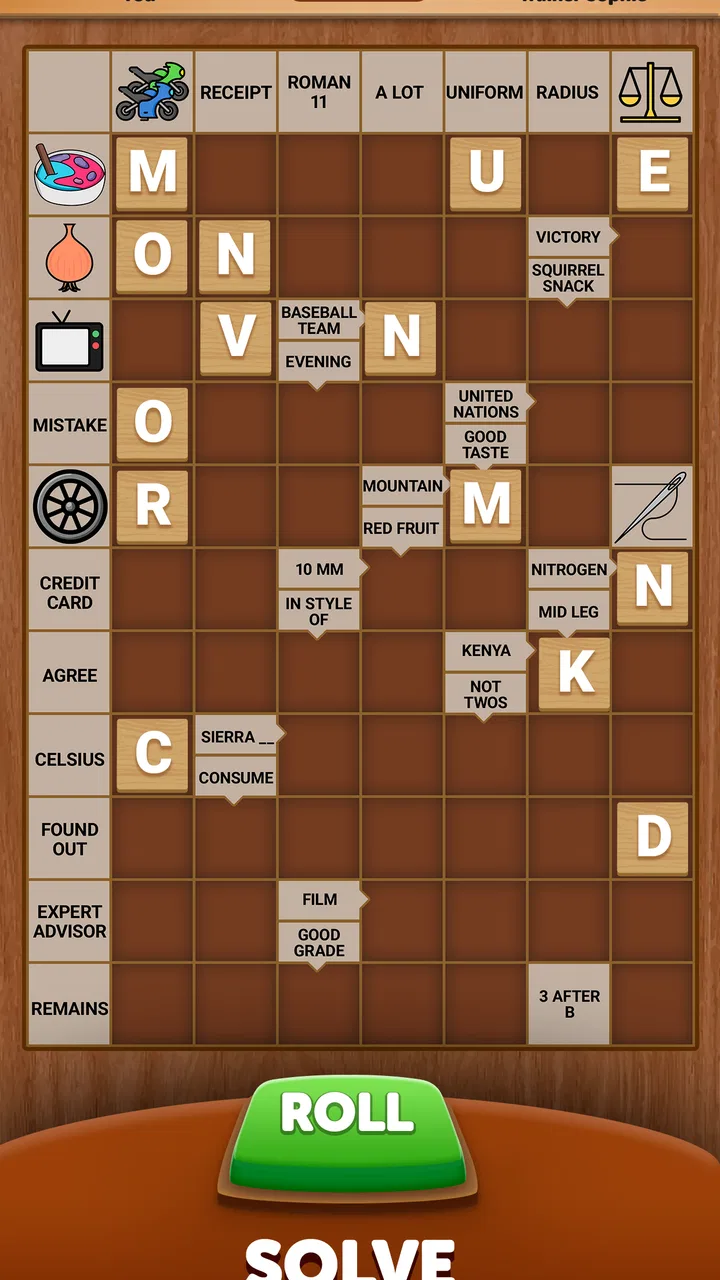
I spent time with Arrow Crosswords as a compact word game built around solving crossword-style clues with an added directional twist. It comes from FunCraft Games, and its central appeal is easy to understand: you are not simply filling a traditional grid, but working through an arrangement where the arrows help guide how answers connect. That small change makes familiar crossword thinking feel more deliberate, especially when several possible answers seem plausible.
My first impression was that this is best approached as a focused puzzle rather than a game you play for spectacle. There is no need to learn a complicated control scheme, and the free entry point makes it easy to try during a quiet moment. The useful question is whether the arrow-based format gives you enough variety and momentum to keep returning. In my experience, it does a good job when I want a calm mental workout, although players who prefer fast action or a large social layer may find the experience too restrained.
How the arrow format changes ordinary crossword habits
The game belongs firmly in the word puzzle category, but the arrows affect the way I read each challenge. In a conventional crossword, I tend to scan across and down, using crossing letters to rescue a clue I cannot solve immediately. Here, the visual direction encourages a more guided reading process. I pay closer attention to where an answer begins, where it points, and how the surrounding entries can confirm or reject my first guess.
You May Also Like

 Blood Strike: 2.5 Anniversary
Blood Strike’s Loadouts Turn Every Drop Into a Tactical Gamble
A close look at Blood Strike’s custom loadouts: how fast access to signature weapons reshapes its battle royale rhythm, rewards preparation, and narrows the gap between fights.

 Pandora - Music & Podcasts
Pandora’s Music Is Easy to Start, but Harder to Recover
Pandora’s strength is its low-effort path from a seed to a station. Its weak spot is how much confidence it asks you to place in connection, setup, and quiet recovery.

 8 Ball Pool
 Is Built on Rivalries, Rematches, and Routine
A close look at the rivalries, rematches, shared routines, and unanswered safety questions that turn a quick pool match into a persistent mobile community.

 Samsung Music
’s Quiet Strength Is Playing What You Already Own
Its reach comes less from spectacle than from dependable access to a personal library. That simplicity is both the app’s strongest retention engine and its ceiling.

 AccuWeather: Weather Radar
AccuWeather Review: A Quick, Clear Forecast for Everyday Decisions
For everyday plans, the best forecast is the one you can understand quickly. AccuWeather makes rain timing, radar, and local conditions easy to act on, with a few trade-offs.

 Hill Climb Racing
Why Hill Climb Racing Still Turns Crashes Into One More Run
A tiny car, a bumpy hill and one more upgrade: Hill Climb Racing keeps resurfacing because its simple chaos makes every near-miss feel personal.
More From Our News Desk
View All News


That makes the opening minutes more approachable than a completely blank crossword grid. The layout gives me a path into the puzzle instead of asking me to inspect every square with equal attention. At the same time, the arrows do not remove the need for vocabulary or deduction. They mainly organize the information, so the satisfying moments still come from recognizing a clue, testing a word, and watching several crossings fall into place.
I found this especially useful when playing on a phone. A traditional crossword can become visually cramped on a small display, while the directional structure gives the eye a clearer route through the board. It is still worth slowing down before tapping, because a quick entry can make later clues harder to interpret. My practical approach is to begin with the clues that feel certain, then use their letters as anchors for the less obvious entries rather than trying to solve everything in order.
The presentation also suits short sessions. I can play while waiting for an appointment, during a coffee break, or at the end of the day when I want something more active than scrolling but less demanding than a competitive game. The lack of a reflex requirement is important here. My attention is spent on language and pattern recognition, not on timing a move or managing several controls at once.
Early goals that make the first sessions worthwhile
The immediate goal is straightforward: complete the current crossword by resolving its clues and fitting the answers correctly. That simplicity works in the game's favor. I never felt buried under a large collection of instructions before I could start thinking. The first useful target is not a long-term achievement; it is learning how the directional layout communicates the relationship between clues and answer spaces.
Once that basic rhythm becomes familiar, the next goal is to improve the quality of my solving. Instead of entering every possible answer, I began asking whether a word matched both the clue and the letters already established around it. This is where the game starts rewarding patience. A guess that looks reasonable in isolation may be wrong once the neighboring entries expose an inconsistency.
For a new player, I recommend treating an unfinished board as a set of small problems rather than one intimidating puzzle. Find the shortest or most obvious entries first, use them to create crossing letters, and then return to the clues that initially looked vague. This workflow is more effective than repeatedly staring at the same difficult clue. It also makes progress feel visible because each confirmed answer changes the options around it.
That early loop is the strongest reason I would suggest the game to someone who already enjoys word searches, crosswords, or other quiet logic activities. It offers a familiar foundation while asking the player to adjust to its arrow-led structure. Someone looking for a dramatic tutorial or a story-driven objective will not find that kind of motivation here, but a puzzle fan can understand the purpose almost immediately.
How progress feels when the board starts opening up
The clearest progress signal is the board itself. Every correct answer supplies information for nearby clues, and that creates a pleasing chain reaction. I might begin with only a handful of confident entries, then suddenly see several possible words become much easier because their letters are now constrained. This is more satisfying than progress represented only by a generic counter, since the improvement is directly visible inside the puzzle I am solving.
I also noticed that the game encourages a useful distinction between recognition and proof. Recognizing a likely answer is only the first step; confirming it through the surrounding structure is what makes the solution trustworthy. That distinction gives the experience a gentle strategic layer. I am constantly deciding whether to commit to a plausible word or wait for another crossing to remove doubt.
One of my favorite habits was to leave a stubborn clue alone after making a note of the letters I already knew. Returning later often made the answer obvious, not because the clue had changed, but because the rest of the board had supplied enough context. This is a concrete advantage of the format for players who dislike random guessing. The puzzle gives you a reason to postpone a problem and a clear way to make it easier through related progress.
The downside is that a wrong entry can create misleading confidence. If I focus too heavily on completing one section, I can spend too long trying to force nearby clues to fit an incorrect word. When that happens, the best solution is to recheck the earliest uncertain answer rather than replacing several later ones. I found that this simple reset habit saves time and keeps the challenge from feeling more confusing than it really is.
With a 4.7 average from around 5.8 thousand ratings, the game has clearly found an audience among people who appreciate this kind of focused word play. I do not treat that number as a substitute for personal taste, but it matches my impression that the core loop is polished enough to satisfy players who want a clean, approachable crossword variation.
The difficulty curve rewards method more than speed
The challenge works best when I stop measuring success by how quickly I finish. The early clues establish confidence, while the harder ones test whether I have used the available letters carefully. The difficulty therefore feels connected to reasoning rather than reaction time. A player with a broad vocabulary will have an advantage, but good board management can compensate when a clue is unfamiliar.
My most reliable method is a three-pass routine. First, I fill only answers that I can defend without hesitation. Second, I inspect the new crossing letters and attempt clues that now have a narrower range of possibilities. Third, I revisit the remaining gaps and check whether an earlier guess needs correction. This approach prevents one difficult area from stopping the whole session and makes the directional design work as a source of information rather than decoration.
There is a trade-off in that structure. Players who enjoy discovering a completely open grid may find the guided format less mysterious than a classic crossword. The arrows help organize the board, so some of the spatial challenge is reduced. In exchange, I get a more accessible experience that feels comfortable on a touchscreen and is easier to pick up without preparing for a long solving session.
Players should also expect vocabulary to be the main barrier. If you dislike clues that depend on word knowledge, this will not become a different type of puzzle simply because of its layout. It may be a better choice than a traditional crossword for someone who wants stronger visual guidance, but it is not the right choice for anyone hoping to avoid language-based difficulty altogether.
The age rating is Everyone, which fits the straightforward nature of the activity. I would be comfortable recommending it as a family-friendly puzzle, though younger players may still need help with vocabulary or clue interpretation. The game is accessible in its controls and presentation, but accessibility of interaction is not the same as universal ease of solving.
What encourages me to return, and what may create friction
The strongest retention pressure comes from unfinished thinking. When I stop halfway through a board, I often remember one clue that was almost solved and want to return to it. That is a healthier kind of motivation than a demand to keep playing continuously. The game works well as a repeatable mental break because each session can end naturally when I complete a puzzle or reach a point where I want to pause.
Its free price also lowers the risk of trying it. The game is available without an upfront purchase, while optional in-app purchases range from under a dollar to amounts approaching one hundred dollars per item. That wide range is worth keeping in mind before spending. I would begin with the free experience and decide only after understanding how often I play and whether any optional purchase genuinely improves my personal routine.
I do not think the purchase structure is automatically a problem, but it is a reason to stay deliberate. A casual player who opens the game occasionally may have no reason to spend. A dedicated solver should still consider whether an optional item supports a real need or simply removes a moment of productive difficulty. For this type of puzzle, overcoming a stubborn clue is often part of the enjoyment, so convenience can sometimes reduce the satisfaction it is meant to provide.
Another possible friction point is pacing. Because the game is built around solving rather than constant novelty, a long session can begin to feel repetitive if I am not in the mood for word work. I would not choose it when I want a strong sense of escalation, dramatic rewards, or quick bursts of stimulation. It is better suited to a steady rhythm in which the pleasure comes from gradually making an arrangement understandable.
The current version is 2.0.24355, and the game runs on Android 7.0 or later. That makes it relevant to people using older compatible Android devices, although the experience will still depend on screen size and general device responsiveness. On a smaller phone, I prefer rotating my attention between the clue text and the board instead of trying to read everything at once. A tablet-sized display would likely be more comfortable for extended sessions, but the basic format remains practical on a phone.
Who should choose it over a usual crossword?
I would recommend Arrow Crosswords to someone who likes crossword solving but wants more visual direction and a less intimidating starting point. The arrows give the board a built-in reading guide, which can be helpful for players who find standard grids cluttered or who lose track of where an answer begins. It is also a good fit for people who want a quiet game that can be played in short, interruptible sessions.
Compared with a standard crossword app, this game feels more guided and less dependent on scanning a large grid. Compared with a word search, it asks for more interpretation because clues and crossings matter; simply spotting letters is not enough. Compared with a fast word game, it is slower and more reflective, with no need to race a clock or compete for immediate recognition. Those differences make the choice fairly clear: select this when you want deduction and vocabulary, not speed or visual spectacle.
I would skip it if your ideal word game is built around creating words from letter tiles, chasing a score under pressure, or playing against other people. I would also look elsewhere if you need a deep narrative reason to keep progressing. The appeal here comes from the puzzle structure itself. That can be wonderfully durable for the right player, but it will not compensate for a dislike of crossword-style clues.
For an everyday example, I can imagine opening it on a train ride with only ten minutes available. I would solve the obvious clues first, use their crossings to narrow the uncertain ones, and stop after reaching a natural pause. Later, I could return without having to remember a complicated storyline or a set of controls. That low-friction continuity is one of the game's most practical strengths.
My progression verdict after settling into the loop
FunCraft Games has shaped the experience around a sensible progression of understanding: first learn to read the arrows, then use confirmed answers to expose new possibilities, and finally manage uncertainty without rushing into guesses. The goals are modest, but they are clear. Progress is shown through the board becoming more complete, and the challenge comes from making good decisions about what to solve now and what to leave for later.
That design sustains play as long as I enjoy the act of solving. It does not need exaggerated rewards to make a completed section feel worthwhile, because the answer network provides its own feedback. The main limitation is equally clear: players who require constant new systems or a strong external progression track may find the loop too narrow.
Released in May 2024, the game has reached over one hundred thousand installs, which places it in the accessible, actively discovered part of the mobile word-game space. Its Everyone rating and free entry make trying it simple, while the optional purchases mean I would pay attention before committing money. The developer, FunCraft Games, has chosen a focused concept rather than an overloaded one, and I think that restraint is mostly effective.
My final recommendation is positive for patient word-game players. Arrow Crosswords is not the best alternative to every crossword or puzzle app, but it has a distinct reason to exist: the directional layout makes solving feel guided without removing the need to think. I would install it for calm sessions, use the three-pass solving method when a board stalls, and judge it by whether I enjoy returning to unfinished clues. If that kind of quiet, structured challenge sounds appealing, this is a free game worth trying.
FAQs for Arrow Crosswords
01What is Arrow Crosswords and how does it work?
Arrow Crosswords is a puzzle app that offers a unique twist on traditional crossword puzzles. Instead of separate clues, arrows are integrated into the grid, pointing to where the answers go. This format allows users to fill in words directly in the grid, making the solving process more intuitive and interactive.
02Is Arrow Crosswords suitable for all skill levels?
Yes, Arrow Crosswords is designed to cater to all skill levels, from beginners to advanced puzzle enthusiasts. The app offers a variety of puzzles with varying degrees of difficulty, so users can choose according to their comfort level and gradually challenge themselves as they improve.
03Does Arrow Crosswords require an internet connection to play?
Arrow Crosswords can be enjoyed both online and offline. Once the puzzles are downloaded, users can solve them without an internet connection, making it a great option for travel or when internet access is limited. However, updates and new puzzle packs may require internet connectivity.
04Are there any in-app purchases in Arrow Crosswords?
Arrow Crosswords offers a selection of free puzzles, but it also includes optional in-app purchases. These can range from additional puzzle packs to premium features that enhance the user experience. The app is free to download, and users can enjoy many features without spending money.
05How does Arrow Crosswords enhance the puzzle-solving experience?
Arrow Crosswords enhances the puzzle-solving experience by providing a seamless and engaging interface. The arrow-based clues simplify the process, allowing users to focus on solving rather than juggling separate clues. The app also includes features like hints and puzzle timers to tailor the experience to individual preferences.
Pros
- User-friendly interface for all ages
- Wide variety of crossword puzzles
- Offline mode available
- Regular updates with new puzzles
- Customizable difficulty levels
Cons
- Ads can be intrusive at times
- Limited free puzzles without subscription
- Occasional lag in older devices
- No hints for difficult puzzles
- In-app purchases can be pricey

Arrow Crosswords
Gallery